
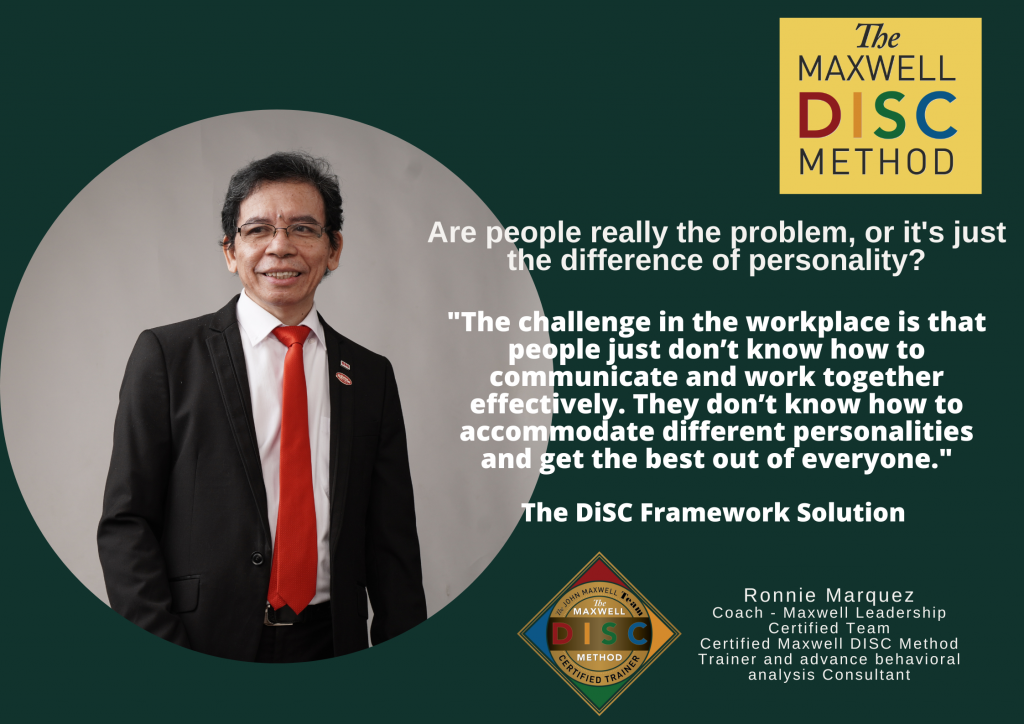
Effective communication is key to successful leadership. The challenge in leadership in today’s world is partly because our genuine, trust-filled dialog is disappearing. Instead, we build relationships through texts, Facebook, Instagram, email, and other apps.”
But, regardless of the changes that technology will bring about, whether digital communications dominate against an in-person conversation, the feelings and emotions that we have remained and the need for encouragement, hope, and love will still exist. People will still look for relationships and meaningful trust-filled and fun conversations.
Even before the rise of digital media as a way to communicate, communications challenges were present. Conflict and misunderstanding are inevitable. Employees leave their companies because they are not happy with their bosses. Husbands and wives separate because of poor communication.
It was not because people are evil. They differ in perspectives and priorities. They needed help managing their differences.
Today, as people are leaning towards the digital platform for communications, it will become more difficult for leaders to manage a team. The challenge now has escalated to a more significant proportion. It has been impacting the productivity of an organization. Leaders are looking for solutions to improve productivity.
What is the solution? Is there a need to Improve processes? or Automate the work systems?
According to Dr. Daniel Goleman, an Author and Psychologist, emotional intelligence is the largest single predictor of success in the workplace.
What is Emotional intelligence (EI or EQ)?
Emotional intelligence (EI) is the area of cognitive ability that facilitates interpersonal behavior. The term Emotional intelligence was popularized in 1995 by Dr. Daniel Goleman in his book, Emotional Intelligence.
In his book, there are five essential elements of EQ:
1. Emotional self-awareness — knowing what one is feeling at any given time and understanding the impact those moods have on others
2. Self-regulation — controlling or redirecting one’s emotions; anticipating consequences before acting on impulse
3. Motivation — utilizing emotional factors to achieve goals, enjoy the learning process, and persevere in the face of obstacles
4. Empathy — sensing the emotions of others
5. Social skills — managing relationships, inspiring others, and inducing desired responses from them.
If EQ can help in managing conflict, organizations must take a serious look into how it can help develop EQ in all of its employees.
The good news is unlike IQ, which is fixed, EQ can be developed. It starts with self-awareness. Are you aware of how you respond to crises? Do you know what your values are and what makes you tick?
As a leader, your role is to grow the EQ of your team, which should start with YOU! The question is, are you willing to get out of your comfort zone and be changed?
Don’t look for a technical solution, if the problem is in the heart.
For my next blog, I will share DiSC Solution’s role as a complementing concept to help you grow as a leader in the area of leadership and communication.